Abrasive Brushes Demystified: Harnessing Silicon Carbide and Diamond Filaments
- Share
- Issue Time
- May 15,2026
Summary
Abrasive brushes are indispensable tools in manufacturing and metalworking, utilizing flexible nylon filaments impregnated with abrasive minerals to achieve precise surface finishes and remove imperfections. Unlike traditional wire brushes, their unique design allows them to conform to irregular surfaces without altering component geometry. Key components include durable nylon filaments (often PA612) for flexibility and self-sharpening action, abrasive grits like Silicon Carbide, Aluminum Oxide,
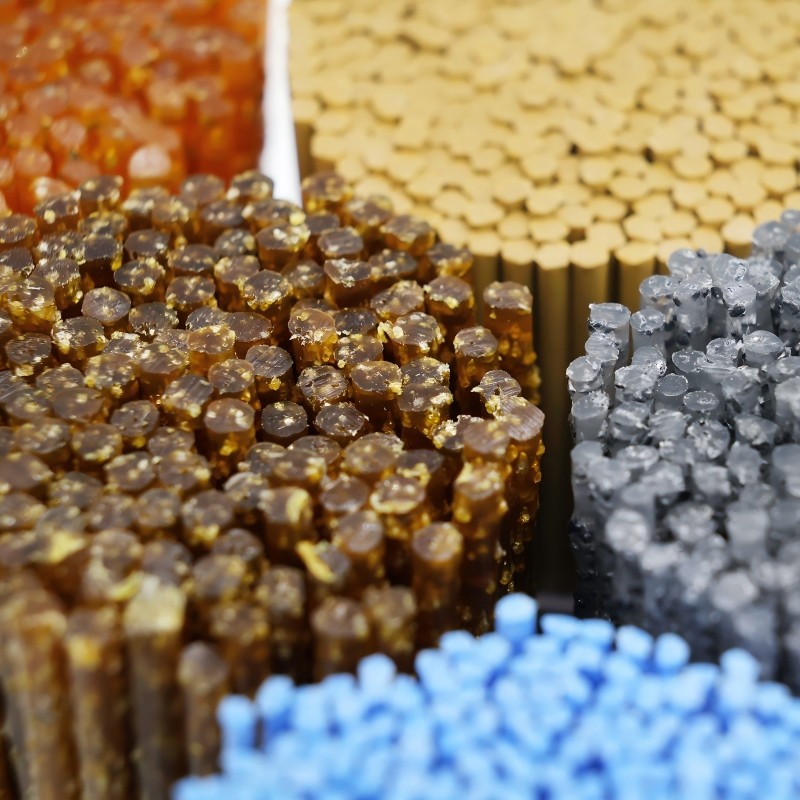
Abrasive brushes are indispensable tools in manufacturing and metalworking, crucial for achieving precise surface finishes and removing imperfections. This guide aims to demystify these versatile tools by exploring their core components and applications. Understanding the distinct properties of silicon carbide and diamond filaments is key to unlocking the full potential of abrasive brushes in various industrial applications. This article will explore how harnessing these advanced materials in abrasive brushes can transform deburring, cleaning, and finishing processes for a wide array of materials, from soft aluminum to hardened ceramics.
Key Takeaways
Success with abrasive brushes hinges on a complete understanding of the tool and the application. The most crucial factor is matching the filament material and grit size to the workpiece material and the desired finish. Silicon carbide offers a versatile, aggressive solution for general-purpose deburring and finishing on most metals, while diamond is reserved for the hardest materials like carbide and ceramics where other abrasives fail. Beyond the abrasive itself, the brush's shape (wheel, cup, end), dimensions (diameter, trim length), and operating parameters (speed, pressure) are critical variables that must be fine-tuned. Lower speeds and light pressure generally yield the best results and maximize brush life. Finally, always prioritize safety by using the correct guarding and wearing appropriate personal protective equipment (PPE), including eye and face protection.
Unlocking Precision: What Are Abrasive Brushes?
Abrasive brushes represent a significant evolution from traditional wire brushes. Instead of metal wires, they utilize flexible nylon filaments impregnated with abrasive minerals. This unique construction allows the brush to conform to irregular surfaces, providing a consistent finish on complex parts without altering their geometry. They are essential tools for tasks requiring precision and a delicate touch, setting them apart from more aggressive material removal methods.
Defining Abrasive Brushes and Their Unique Action
An abrasive brush is a specialized power tool accessory designed for deburring, surface finishing, and cleaning. Unlike traditional wire brushes that use metal filaments, abrasive brushes consist of flexible nylon filaments that are co-extruded with abrasive grains like silicon carbide, aluminum oxide, or diamond. This construction is key to their unique action: the filaments act like flexible files, conforming to the contours and irregularities of a workpiece.
The primary advantage of this design is its ability to perform work without significantly changing the part's dimensions or geometry. While a wire brush acts with aggressive impact, removing surface material through force, an abrasive nylon brush has a smoother cutting and polishing action. The abrasive particles are distributed throughout the filament, meaning the brush cuts with both the tips and the sides of the bristles, providing a more consistent and controlled finish. This makes them ideal for delicate tasks where preserving the integrity of the base material is paramount.
Essential Components: Filaments, Grits, and Hubs
The performance of an abrasive brush is determined by the synergy of its three main components: the filaments, the abrasive grits, and the hub.
Filaments: The backbone of the brush is the filament material, which is most commonly a durable and heat-stabilized nylon, such as PA6 or PA612. These polymer filaments are the carriers for the abrasive particles. They provide the necessary flexibility to conform to complex part geometries and resilience for long life. The diameter and length of the filaments are critical; thicker, shorter filaments create a more aggressive, rigid brush, while longer, thinner filaments offer greater flexibility for finishing contoured surfaces.
Grits: The "grit" refers to the abrasive mineral particles infused into the nylon filaments. The type of mineral and the size of the particles define the brush's cutting action. Common abrasive types include Silicon Carbide, Aluminum Oxide, and Diamond. Grit size is measured on a scale where lower numbers indicate coarse, aggressive particles, and higher numbers denote fine, polishing particles. For example, a 60-grit brush is for heavy deburring, while a 400-grit brush is for fine surface polishing. A key feature of these filaments is their self-sharpening nature; as the nylon wears down, new abrasive particles are exposed, ensuring consistent performance.
Hubs: The hub is the structure that holds the filaments in place. Hubs can be made from various materials, including high-density plastic, urethane, or metal (steel or aluminum), depending on the application's demands. For high-speed or high-temperature operations, a metal hub provides superior durability and heat dissipation. The hub design also dictates how the brush is mounted, with common options including an arbor hole for use on grinders or motors. High-performance brushes often feature dynamically balanced cores to ensure vibration-free operation at high speeds.
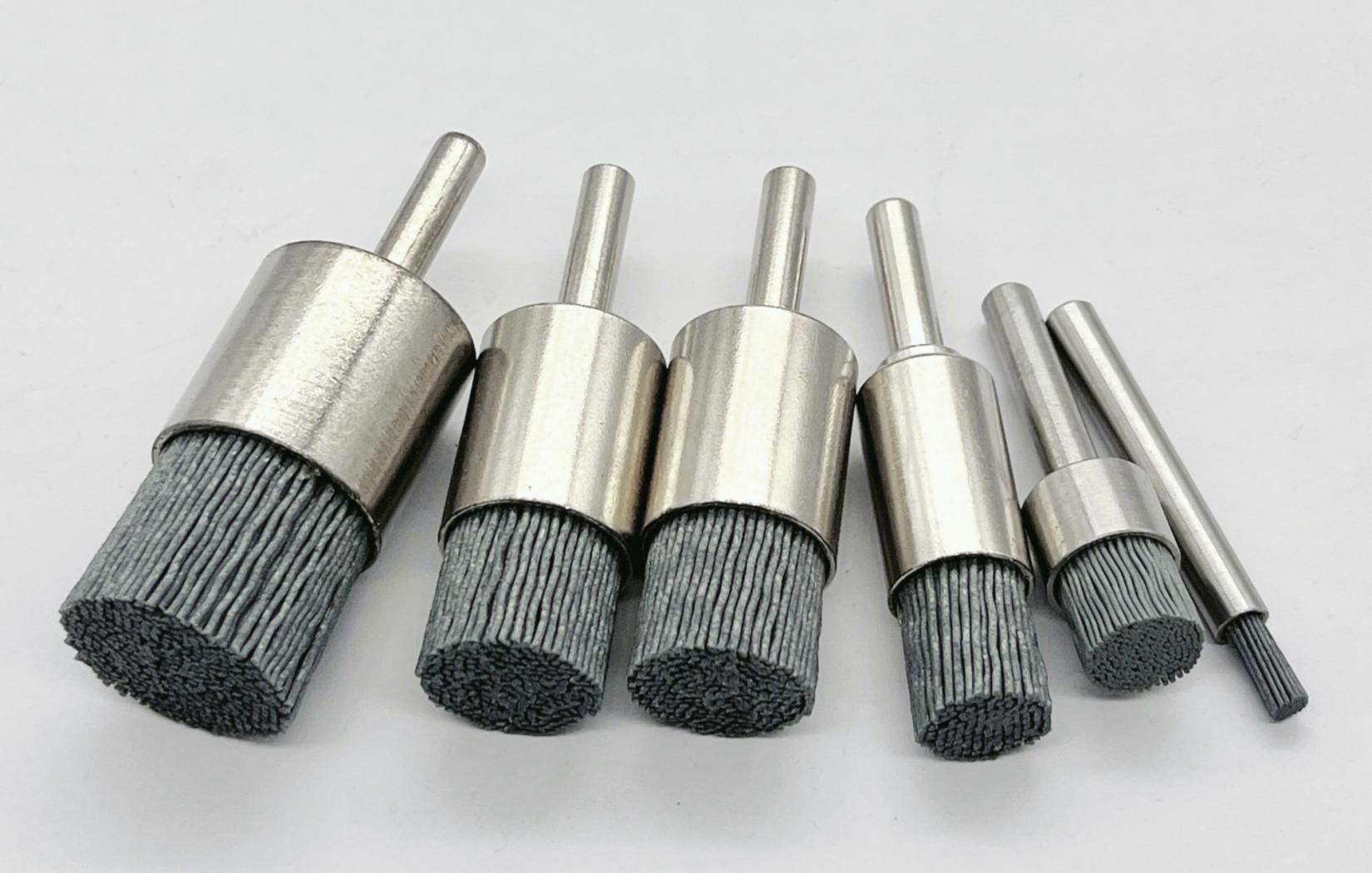
Foundational Applications: Deburring, Honing, and Finishing
The versatility of abrasive brushes makes them suitable for a wide range of surface treatment applications across industries like automotive, aerospace, metal fabrication, and woodworking. The three most common uses are deburring, honing, and finishing.
Deburring: This is the process of removing the small, sharp imperfections, known as burrs, that are left behind after machining operations like drilling, milling, or stamping. Abrasive brushes are highly effective for deburring because their flexible filaments can reach into complex geometries, such as the roots of gear teeth or cross-drilled holes, to remove burrs without damaging the surrounding surface or altering the part's critical dimensions.
Honing: While often associated with cylinder bores, honing with abrasive brushes refers to a fine finishing process that improves surface texture and geometry. It creates a specific cross-hatch pattern on a surface, which is excellent for oil retention on moving parts. Abrasive brushes used for honing can produce a very precise, low-roughness surface, improving the performance and lifespan of components.
Finishing: This is a broad category that includes creating a specific surface appearance or preparing a surface for a subsequent process like painting or coating. Abrasive brushes can produce a variety of finishes, from a dull matte to a bright, pre-polished look. They can blend machining marks, remove scale and oxide, and create a uniform directional grain, often referred to as a "brushed finish."
Achieving Controlled Edge Rounding
Controlled edge rounding, also known as edge radiusing, is a critical process in manufacturing that goes beyond simple deburring. While deburring removes the sharp, unwanted material (the burr) from an edge, edge rounding creates a smooth, deliberately curved profile with a specific radius. This is a crucial step for part quality, safety, and performance.
Why is controlled edge rounding important?
- Improved Coating Adhesion: Paint, powder coatings, and other surface treatments struggle to adhere to sharp 90-degree edges. The coating thins out at the edge, creating a weak point that is prone to chipping and corrosion. A rounded edge provides a larger, smoother surface area, allowing for a uniform and durable coating thickness.
- Enhanced Safety: Rounded edges eliminate the risk of cuts and injuries to workers who handle the parts during assembly and maintenance.
- Increased Part Durability: Sharp corners are points of high-stress concentration. By rounding the edge, stress is distributed more evenly, reducing the risk of cracks or fractures under load and extending the component's service life.
Abrasive filament brushes are an ideal tool for this task. Unlike rigid grinding wheels or manual files, the flexible filaments conform to the part's edge, creating a consistent and reproducible radius. The degree of rounding can be precisely controlled by managing several variables: brush type (filament material, grit size, density), operational parameters (speed, pressure), and the duration of the brushing action (dwell time). This allows manufacturers to achieve a defined edge radius that meets strict engineering specifications.
Surface Preparation for Optimal Results
Proper surface preparation is arguably the most critical step for ensuring the quality and longevity of any coating, paint, or adhesive bond. Abrasive brushes are exceptionally well-suited for this task because they can simultaneously clean the surface and create a specific texture, or "profile," that promotes mechanical adhesion.
For coatings like paint or powder coat to bond effectively, the surface must be clean and have a certain level of roughness. A perfectly smooth, polished surface does not provide enough "grip" for the coating to anchor itself. Abrasive brushes can remove light rust, scale, old paint, and other contaminants while imparting a uniform, finely abraded texture. This micro-profile significantly increases the surface area and provides an ideal topography for the coating to lock onto, preventing peeling, blistering, and premature failure.
The desired surface roughness, often measured as Ra (Roughness Average), depends on the coating being applied. Generally, a higher roughness is needed for thicker coatings. Abrasive brushes offer excellent control over the final surface profile by selecting the appropriate grit size. Finer grits create a smoother finish for thin coatings, while coarser grits produce a more aggressive profile for heavy-duty industrial paints.
Cleaning and Descaling Tasks
Abrasive brushes are workhorses for general industrial cleaning and the removal of surface contaminants like rust, oxides, and scale. Mill scale—a flaky surface layer of iron oxides formed on steel during hot rolling—and heat treat scale must be removed before fabrication or coating. Abrasive brushes excel at these tasks for several reasons.
Their flexible filaments can reach into pits and across irregular surfaces where rigid tools cannot, ensuring a thorough cleaning. Unlike chemical methods, brushing is a mechanical process that avoids the use of harsh acids and solvents. Furthermore, abrasive nylon brushes are less aggressive than traditional wire brushes, reducing the risk of gouging or damaging the underlying material.
For heavy rust or thick scale, coarse-grit silicon carbide brushes are extremely effective. For lighter oxides or surface discoloration on materials like aluminum and stainless steel, a finer grit aluminum oxide or silicon carbide brush can clean the surface without altering its finish significantly. This makes them ideal for a wide range of cleaning applications, from preparing structural steel for painting to cleaning weld beads and removing spatter.
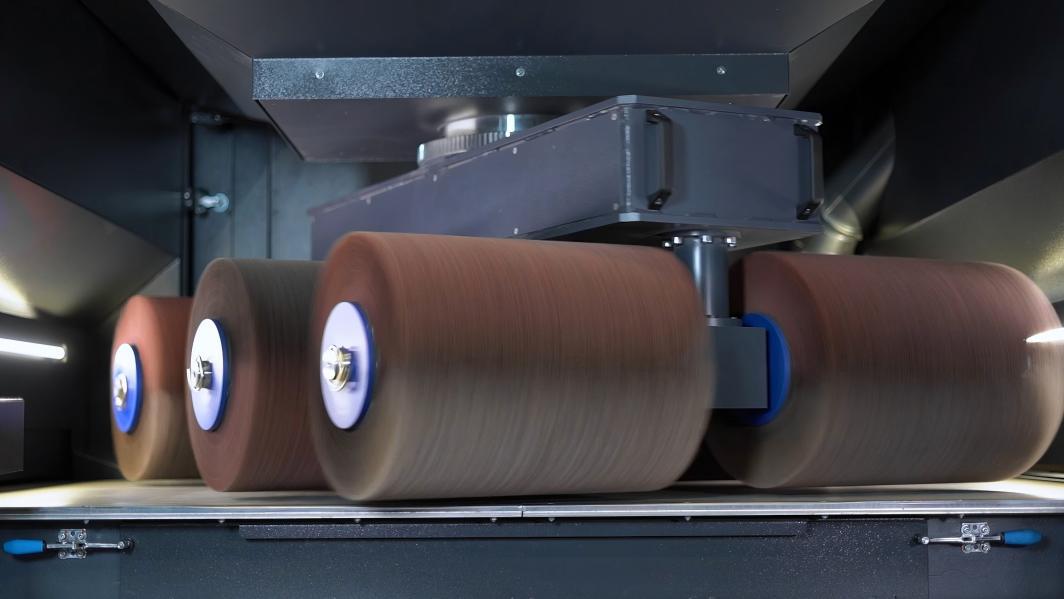
The Core of Performance: Harnessing Silicon Carbide and Diamond Filaments
The cutting power of an abrasive brush comes from the specific mineral grain embedded in its nylon filaments. The choice between materials like silicon carbide and diamond depends entirely on the workpiece material and the desired outcome. Understanding their unique properties is essential for optimizing performance, finish quality, and tool life.
The Versatility of Nylon with Abrasive Grit
Nylon serves as the ideal carrier for abrasive grits due to its unique combination of properties. Several types of nylon are used, but Nylon 612 (PA612) is often preferred for high-performance industrial applications. This is because PA612 has excellent bend recovery, durability, and a very low moisture absorption rate, meaning its stiffness and performance remain consistent in both wet and dry conditions. Other nylons like PA6 have higher water absorption, which can cause filaments to soften.
The process of creating an abrasive filament involves co-extruding the nylon polymer with abrasive mineral grains. This results in a monofilament where the abrasive particles, which can make up 10% to 30% of the filament's weight, are homogenously distributed throughout the entire structure.
This method offers several key advantages:
- Self-Sharpening Action: As the brush is used, the nylon at the tip wears away, constantly exposing new, sharp abrasive grains. This ensures the brush maintains a consistent cutting action throughout its life, unlike coated abrasives which become dull once the surface layer is gone.
- Flexibility and Conformability: Nylon's inherent flexibility allows the filaments to adapt to complex shapes, contours, and internal passages, ensuring a uniform finish even on irregular parts.
- Durability and Safety: Nylon filaments are highly resistant to chemicals and fatigue failure. Unlike wire brushes, they do not carry the risk of filament breakage where metal wires can fly off and cause injury or contaminate the workpiece.
This combination of a resilient, flexible carrier with a continuously renewed cutting surface makes abrasive nylon brushes incredibly versatile tools suitable for everything from aggressive deburring to fine polishing.
Silicon Carbide Filaments: The Go-To for Steels, Aluminum, and Composites
Silicon carbide (SiC) is one of the most widely used abrasives for industrial applications, prized for its exceptional hardness and sharp grain structure. On the Mohs scale, silicon carbide ranks around 9.2-9.5, making it harder than aluminum oxide and capable of cutting most metals with ease. Its advantage lies not just in its hardness, but in the shape of its grains; they are long, sharp, and somewhat brittle.
This brittleness allows the grains to fracture under pressure, creating new sharp edges in a process known as "friability" or self-sharpening. This characteristic ensures that the brush maintains an aggressive, consistent cutting action throughout its lifespan. Silicon carbide's high thermal conductivity also helps to dissipate heat generated during grinding, reducing the risk of heat damage to the workpiece.
Because of these properties, silicon carbide filaments are the preferred choice for a broad range of materials, including:
- Steels and Cast Iron: SiC provides an aggressive cutting action that is highly effective for deburring, edge radiusing, and surface cleaning on both carbon and stainless steels.
- Aluminum and other Non-Ferrous Metals: Its sharpness allows it to cut soft metals like aluminum cleanly without excessive loading (clogging) of the brush filaments.
- Composite Materials: The aggressive yet controlled action of SiC brushes is also effective for finishing and surface preparation on modern composites used in aerospace and automotive industries.
Overall, silicon carbide's blend of hardness, sharpness, and self-renewing cutting edges makes it an exceptionally versatile and effective abrasive for general-purpose to heavy-duty finishing tasks.
Selecting the Right Grit Size for Specific Needs
Choosing the correct grit size is fundamental to achieving the desired outcome, whether it's aggressive material removal or a fine, polished finish. Abrasive grit size is measured using standardized scales (like ANSI or FEPA) where the number corresponds to the number of openings per linear inch in a sieve used to sort the particles.
- Lower grit numbers mean fewer, larger particles, resulting in a coarse abrasive.
- Higher grit numbers mean more, smaller particles, resulting in a fine abrasive.
Matching the grit size to the application is a balance between speed and quality of finish. Here is a general guide for selecting silicon carbide grit sizes for various tasks:
| Grit Size Range | Classification | Primary Applications | Resulting Finish |
|---|---|---|---|
| 24 - 80 | Coarse | Heavy deburring, removing significant burrs, scale, rust, and old paint. Fast material removal. | Rough surface, visible scratch pattern. |
| 120 - 180 | Medium | General purpose deburring, edge blending, cleaning, and surface preparation for coatings. | Smooth to the touch, light satin finish. |
| 240 - 320 | Fine | Light deburring, removing scratches from previous steps, creating a refined surface texture, pre-polishing. | Very smooth surface with a consistent, decorative finish. |
| 400 and up | Very Fine | Polishing, honing, and achieving a high-gloss or mirror-like finish on metal surfaces. | Highly reflective, smooth surface with minimal scratches. |
General Strategy: A common best practice is to "work through the grits." Start with a grit coarse enough to efficiently complete the initial task (e.g., deburring with 120 grit) and then move sequentially to finer grits (e.g., 240 grit, then 400 grit) to remove the scratches from the previous step and achieve the final desired smoothness. Skipping a grit level can make it difficult to remove deeper scratches, resulting in an inconsistent finish.
Diamond Filaments: Precision for Extremely Hard Materials
When machining moves beyond common metals into the realm of ultra-hard and brittle materials, silicon carbide is no longer effective. For these applications, diamond filaments are the required solution. Diamond is the hardest known natural substance, rating a 10 on the Mohs scale. This allows it to effectively cut, grind, and polish materials that other abrasives cannot even scratch.
Abrasive brushes with diamond-impregnated filaments are engineered for high-precision surface finishing on materials that pose significant machining challenges. The manufacturing process is similar to that of silicon carbide brushes, where microscopic synthetic diamond particles are embedded within a durable nylon filament.
The primary advantages of diamond abrasive brushes are:
- Unmatched Hardness: Diamond's extreme hardness allows it to efficiently abrade hardened steels, carbide, ceramics, and other advanced materials with minimal tool wear.
- Superior Thermal Conductivity: Diamond excels at dissipating heat, which is crucial when working with materials that are sensitive to thermal stress or can cause high frictional heat. This reduces the risk of thermal damage to the workpiece.
- Exceptional Durability and Longevity: Because diamond is so hard, these brushes maintain their cutting ability for significantly longer than other abrasive types, leading to a lower cost of use over time in high-volume applications.
While more expensive initially, diamond filament brushes are indispensable for achieving fine tolerances and superior surface finishes on the most demanding materials in modern manufacturing.
Applications in Carbides, Ceramics, and Hardened Tool Steels
The unique strength of diamond abrasive brushes makes them essential for high-precision applications involving materials that are too hard for conventional abrasives. The primary use cases are concentrated in industries that rely on advanced, high-performance materials.
Carbides: Tungsten carbide and other carbide materials are used extensively for cutting tools (drills, end mills, inserts), wear parts, and dies. After grinding, these components often have sharp, brittle edges and micro-burrs. A diamond filament brush is the only tool that can effectively and safely perform edge radiusing and surface honing on carbide. It can produce a precise edge radius that strengthens the cutting edge, preventing chipping and extending tool life, without altering the critical geometry of the tool.
Ceramics: Advanced ceramics are used in a variety of high-tech applications, from aerospace components to medical implants and electronic substrates. These materials are extremely hard and brittle. Diamond abrasive brushes are used to deburr, polish, and finish ceramic parts after initial shaping. The flexible filaments can conform to complex shapes, providing a smooth, high-quality surface finish that is free of micro-cracks.
Hardened Tool Steels: Tool steels, which are heat-treated to achieve very high hardness levels (often above 60 HRC), are used to make molds, dies, and other tooling. Finishing and polishing these hardened surfaces can be challenging. Diamond brushes are used for fine deburring, polishing mold cavities to a mirror finish, and removing the fine recast layers left by Electrical Discharge Machining (EDM).
In all these applications, the goal is to refine the surface and edge condition to improve the part's performance, safety, and longevity. Diamond abrasive brushes provide the necessary cutting power in a controlled, flexible format that is unmatched by any other tool.
Tailoring Your Tool: Selecting the Ideal Abrasive Brush
Choosing the right abrasive brush is a critical decision that directly impacts the quality of the finish, the efficiency of the process, and the overall cost of the operation. A systematic approach that considers the workpiece material, the desired finish, and the geometry of the part will lead to the optimal brush selection.
Material-Specific Guidance: Matching Filaments to Workpiece
The fundamental principle of selecting an abrasive brush is to match the abrasive material to the workpiece material. The goal is to use an abrasive that is hard enough to cut the workpiece efficiently but not so aggressive that it causes damage. Following material-specific guidelines prevents issues like contamination, excessive material removal, or premature brush wear.
Considerations for Steel, Stainless Steel, and Aluminum
Steel and Stainless Steel
- Abrasive Choice: Silicon carbide (SiC) is generally the best choice for both carbon and stainless steel. Its hardness and aggressive cutting action are ideal for deburring, edge blending, and removing scale. Aluminum oxide (AO) can also be used, particularly for finer finishing operations on softer steels.
- Contamination: A critical concern when working with stainless steel is preventing ferrous contamination. Using a brush that has previously been used on carbon steel can embed iron particles into the stainless surface, which will later manifest as rust spots. It is an industry-best practice to dedicate specific brushes for stainless steel work only. These brushes should be made with stainless steel wire or a non-metallic abrasive filament to avoid introducing foreign contaminants.
Aluminum
- Abrasive Choice: Aluminum is a much softer metal, so the choice of abrasive is important to avoid a "loading" or clogging effect, where the soft aluminum heats up and smears onto the abrasive filaments. Silicon carbide is often preferred because its sharp grains provide a clean cut with less heat buildup. For very fine finishes or light cleaning, a less aggressive aluminum oxide brush can also be effective.
- Process: When brushing aluminum to create a decorative satin finish, it's essential to use light, consistent pressure and move the brush in a single direction to create a uniform grain pattern. Progressing through finer grits (e.g., starting with 180 and finishing with 320) can achieve a very smooth, professional look.
Special Requirements for Titanium, Wood, and Plastics
Titanium
- Challenges: Titanium and its alloys are notoriously difficult to machine due to their toughness, high strength, and low thermal conductivity, which can lead to significant heat buildup. They are also highly reactive and susceptible to galvanic corrosion.
- Brush Selection: When brushing titanium, the primary concern is avoiding contamination that can lead to galvanic corrosion. Using a stainless steel brush can embed iron particles into the titanium surface, creating a "battery" in the presence of moisture that accelerates corrosion. Therefore, the best practice is to use brushes made with titanium wire filaments or a non-metallic abrasive like silicon carbide or aluminum oxide that is dedicated solely to titanium use. Due to the heat generated when working with titanium, operating at lower speeds and using a coolant is often recommended to prevent overheating the workpiece and the brush.
Wood
- Application: Abrasive nylon brushes are highly effective for finishing wood, particularly for creating a textured, "wire-brushed" or "antiqued" look. This process removes the softer earlywood, highlighting the harder latewood grain and creating a tactile, aged appearance.
- Brush Selection: Unlike metalworking, using an actual steel wire brush on wood can be overly aggressive, tearing the wood fibers and leaving a fuzzy surface. An abrasive nylon brush with a coarse (e.g., 80 grit) silicon carbide filament is ideal. It is strong enough to remove the soft wood fibers but flexible enough not to gouge the surface. After the initial texturing, a finer grit (180-240) nylon brush can be used to smooth the surface and remove any "fuzz" before applying a stain or finish.
Plastics
- Application: Abrasive brushes are used to deburr and finish plastic parts after molding or machining. Burrs on plastic parts can be sharp and affect fit and function.
- Brush Selection: The key challenge with plastics is their low melting point. Aggressive brushing can generate enough friction and heat to melt the plastic, smearing it on the surface and ruining the finish. For this reason, a gentle approach is required. Soft nylon brushes with fine abrasive grits (e.g., 240 or higher) are recommended. It is crucial to operate the brush at a low speed and use very light pressure to minimize heat generation. Using a coolant or water can also help keep the workpiece and brush cool during the process.
The Role of Brush Form Factor: Choosing the Right Shape
The physical shape, or form factor, of an abrasive brush is just as important as its filament material and grit. The shape determines how the brush interacts with the workpiece, its accessibility to different surface features, and the type of finish it will produce. Each form factor is designed for specific tasks.
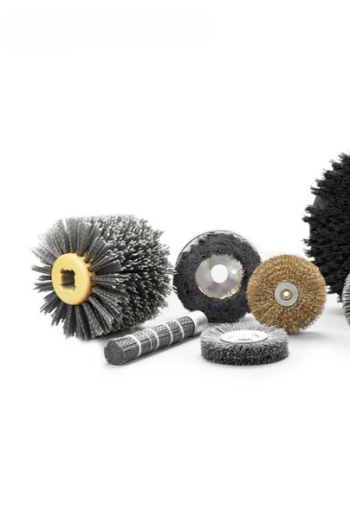
An assortment of common abrasive brush shapes, each designed for a specific application.
Wheel, Cup, End, and Cylindrical Brushes Explained
Selecting the correct brush shape is essential for matching the tool to the geometry of the workpiece and the specific finishing task. The four most common shapes—wheel, cup, end, and cylindrical—each offer distinct advantages.
| Brush Type | Description & Appearance | Primary Use Cases | Action |
|---|---|---|---|
| Wheel Brush | A classic circular brush with filaments extending radially from a central hub. Looks like a wheel. | General-purpose deburring, surface cleaning, and line finishing on flat or contoured surfaces. Ideal for long, straight brushing paths. | Provides a linear, straight-line brushing action. The face of the wheel does the work. |
| Cup Brush | Filaments are arranged in a cup-like shape, extending from a solid base. Often used on angle grinders. | Cleaning and preparing large, flat surfaces quickly. Excellent for removing heavy rust, scale, and paint. | Offers a multi-directional brushing action as both the face and the side of the filaments can engage with the surface. |
| End Brush | A small, compact brush with filaments extending from the end of a shank, resembling a paintbrush. | Precision deburring and cleaning in hard-to-reach areas like internal bores, cross-holes, corners, and recesses. | Uses the tips and sides of its filaments to act like a flexible file in confined spaces. |
| Cylindrical Brush | A long, wide brush with filaments covering a cylindrical core. Also known as a roller brush. | Used in automated or conveyorized systems for wide surface treatment, such as cleaning metal sheets, panel dusting, or texturing wood. | Provides consistent, full-width contact for continuous processing over large surface areas. |
By understanding the strengths of each shape, operators can ensure they are using the most efficient and effective tool for the job, whether it's broad surface preparation with a cup brush or intricate deburring with an end brush.
Understanding Brush Dimensions: Diameter, Face Width, and Filament Length
Beyond the shape, the specific dimensions of a brush are critical variables that dictate its performance characteristics. The diameter, face width, and filament length must be carefully considered to optimize the brushing action for a particular application.
Diameter: The overall diameter of a wheel or cup brush has a direct effect on its surface speed. For a given rotational speed (RPM), a larger diameter brush will have a higher surface feet per minute (SFPM), which generally results in a more aggressive action. However, excessively high surface speeds can cause nylon filaments to overheat and smear, so finding the right balance is key. Smaller diameter brushes are typically run at higher RPMs to achieve an effective surface speed.
Face Width: The face width refers to the width of the brushing surface on a wheel or cylindrical brush. A wider face provides greater surface coverage, making it more efficient for processing large, flat parts. A narrower face is more suitable for targeted work or finishing smaller components where a large brush would be cumbersome.
- Filament Length (Trim Length): This is one of the most important dimensions influencing a brush's behavior. The trim length is the measurement of the filament from where it exits the hub to its tip. The relationship is straightforward:
- Short Trim Length: Creates a stiff, rigid brush with an aggressive cutting action. This is ideal for heavy deburring and fast material removal.
- Long Trim Length: Results in a highly flexible brush that can easily conform to irregular shapes and contours. This is best for fine finishing, cleaning, and working on complex parts.
How Dimensions Influence Aggressiveness and Flexibility
The interplay between a brush's dimensions creates a spectrum of performance from highly aggressive to extremely flexible. Mastering how to balance these properties is key to successful surface finishing.
Aggressiveness is the brush's ability to remove material quickly. It is primarily influenced by:
- Short Filament Trim Length: Shorter filaments are stiffer and transfer more energy directly to the workpiece, resulting in a faster cut.
- Thick Filament Diameter: A thicker filament is inherently more rigid and contributes to a more aggressive action.
- High Filament Density: More filaments packed into the hub mean more cutting points engaging the workpiece at any given time, which increases the rate of material removal.
- Large Brush Diameter: When run at the same RPM, a larger diameter brush has a higher surface speed, which can increase aggressiveness, though excessive speed can have detrimental effects like filament flaring.
Flexibility is the brush's ability to conform to the shape of the workpiece. It is critical for finishing contoured parts, internal passages, and complex geometries without altering their shape. Flexibility is influenced by:
- Long Filament Trim Length: Longer filaments can bend and flex more easily, allowing them to wrap around contours and reach into recesses.
- Thin Filament Diameter: A finer filament is naturally more pliable and less stiff.
- Low Filament Density: Fewer filaments in the brush provide more room for each one to move and bend, enhancing the overall flexibility.
The core principle is a trade-off: features that increase aggressiveness inherently decrease flexibility, and vice versa. The ideal brush is one that is just aggressive enough to accomplish the task efficiently without being so stiff that it fails to conform to the part's surface or so flexible that it lacks cutting power. For example, to deburr the outside of a flat steel plate, a short-trim, high-density wheel brush would be effective. In contrast, to finish the inside of a curved tube, a long-trim, lower-density brush would be necessary to navigate the contours.
Best Practices for Abrasive Brush Operation and Longevity
To get the most out of your abrasive brushes—in terms of both performance and lifespan—it is crucial to follow established best practices for operation, maintenance, and safety. Proper use not only ensures a high-quality finish but also maximizes the cost-effectiveness of the tool and protects the operator.
Optimizing Performance: Speed, Pressure, and Angulation
Achieving the perfect balance of material removal and surface finish requires careful control over three key operating parameters: speed, pressure, and angulation.
Speed (RPM/SFPM): Operating speed is one of the most critical factors. A common mistake is to run abrasive brushes at the maximum RPM listed on the tool. This maximum speed is a safety rating, not an optimal operating speed. In fact, running nylon abrasive brushes too fast can be counterproductive. Excessive speed generates heat, which can cause the nylon filaments to melt or "smear" on the workpiece. High speeds can also cause the filaments to become too stiff and bounce off the surface rather than conforming to it. A good starting point for most dry applications is a surface speed below 2,500 SFPM (Surface Feet Per Minute), and below 3,500 SFPM when a coolant is used. The optimal speed is often found through trials, but generally, lower speeds allow for better filament engagement and a more controlled abrading action.
Pressure: Abrasive nylon brushes are designed to work with their tips and sides. Unlike wire brushes that require very light pressure to let the wire tips do the work, abrasive nylon brushes are more effective with moderate pressure. This allows the workpiece to engage deeper into the filaments. A good rule of thumb is to apply enough pressure to flex the filaments by about 10% of their trim length. Applying excessive pressure is a common error; it causes the filaments to over-bend, leading to a wiping action instead of a cutting one. This generates heat, reduces efficiency, and dramatically shortens the life of the brush through premature filament breakage. If more aggressive action is needed, it is better to switch to a coarser grit or a brush with a shorter trim length rather than increasing pressure.
Angulation: The angle at which the brush addresses the workpiece is crucial, especially for deburring. For best results, the brush filaments should strike the burr perpendicularly. When deburring an edge, rotating the brush in the direction opposite to the cutting tool path that created the burr is most effective, as this allows the filaments to lift and remove the burr rather than just pushing it down. In automated systems, offsetting the centerline of the brush slightly from the centerline of the part can also maximize the number of filaments striking the edge, improving efficiency.
Maintenance and Care for Extended Brush Life
Proper maintenance is key to maximizing the life and performance of your abrasive brushes. A few simple steps can prevent premature wear, ensure consistent results, and reduce overall operating costs.
- Regular Cleaning: After use, brushes should be cleaned to remove accumulated debris, metal fines, and residual polishing compounds. For dry applications, compressed air can be used to blow out the particles from between the filaments. For wet applications, rinsing the brush with water and a mild detergent can be effective. Ensure the brush is compatible with any cleaning solvents used.
- Proper Storage: Storage practices significantly impact brush life. Brushes should be stored in a clean, dry environment away from direct sunlight, extreme temperatures, and moisture. UV exposure can make nylon filaments brittle, and humidity can lead to corrosion on brushes with metal components. Storing brushes in their original packaging or hanging them vertically prevents the filaments from becoming bent, crushed, or permanently deformed. Do not stack heavy objects on top of brushes.
- Periodic Inspection: Regularly inspect brushes for signs of wear, such as shortened or uneven filaments, and damage to the hub. As a brush wears, you may need to adjust operating parameters (like increasing the depth of cut) to maintain consistent performance.
- Reverse Rotation: For wheel and cup brushes used in automated systems, periodically reversing the direction of rotation can promote even wear and a self-sharpening effect on the filaments. This simple step can significantly improve performance and extend the life of the tool.
By implementing these maintenance procedures, you can ensure that your abrasive brushes remain effective and durable for as long as possible.
Crucial Safety Protocols and Personal Protective Equipment
Operating power tools of any kind carries inherent risks, and abrasive brushes are no exception. The high rotational speeds and the nature of the work—removing material—necessitate strict adherence to safety protocols to protect the operator and those nearby.
Core Safety Mandates:
Always Wear Appropriate PPE: This is the most critical rule. During any brushing operation, material particles and even brush filaments can be ejected at high velocity. The minimum required PPE includes:
- Eye and Face Protection: ANSI-approved safety goggles or a full face shield worn over safety glasses are mandatory.
- Hand Protection: Durable gloves protect against sharp edges on the workpiece and from abrasive contact.
- Protective Clothing: Long-sleeved shirts and pants protect the skin from flying debris.
- Respiratory Protection: For applications that generate significant dust, a NIOSH-approved respirator is essential to prevent inhalation of harmful particles.
Respect the Maximum Safe Free Speed (MSFS): Every brush is rated with a maximum RPM. This speed must never be exceeded. Ensure the RPM rating of your power tool does not exceed the MSFS marked on the brush.
Use Machine Guards: All guards on grinders or other power tools must be in place. They are designed to contain debris and protect the operator in the event of a tool failure.
Inspect Brushes Before Use: Before mounting, inspect the brush for any signs of damage, rust, or deterioration. A damaged brush can fail during operation and should be discarded.
Proper Mounting: Ensure the brush is securely mounted on the tool's spindle. An improperly mounted or unbalanced brush can cause severe vibration and lead to failure.
Initial Run-In: After mounting a new brush, run the tool at operating speed for at least one minute in a protected area before applying it to the workpiece. Stand to the side, not in front of or in line with, the brush during this time. This allows you to check for any vibration or mounting issues.
By making these safety practices a standard part of the workflow, operators can significantly minimize the risk of injury.
Avoiding Contamination and Ensuring Safe Disposal
In addition to operational safety, maintaining part quality and environmental responsibility requires attention to contamination control and proper disposal of worn brushes.
Avoiding Contamination Cross-contamination is a significant risk in metal finishing, particularly when working with different types of metals.
- Isolate Brushes by Material: The most critical practice is to dedicate brushes to specific materials. Never use a brush on stainless steel or aluminum if it has previously been used on carbon steel. Particles from the carbon steel can become embedded in the surface of the non-ferrous metal, leading to galvanic corrosion and rust.
- Color-Coding Systems: Many facilities implement a color-coding system to prevent mix-ups. For example, brushes for carbon steel might be marked with red, while brushes for stainless steel are marked with blue. This provides a clear visual cue for operators.
- Separate Storage: Store brushes for different materials in separate, clearly labeled containers or areas of the workshop. This prevents accidental contact and transfer of contaminants. Even airborne dust from grinding carbon steel can settle on a stainless steel brush and cause issues.
Safe Disposal Abrasive brushes, like all consumable tools, will eventually wear out and need to be replaced. a
- Check Local Regulations: Disposal regulations for industrial waste can vary significantly by location. Always consult local environmental and waste management authorities for guidance on how to properly dispose of used abrasive materials.
- Separation for Recycling: Many abrasive brushes are composite tools made of a plastic or metal hub and nylon filaments. Depending on local recycling capabilities, it may be possible to disassemble the brush and recycle the components separately. Metal hubs are often recyclable as scrap metal.
- - Hazardous Waste Considerations: If the brush has been used to remove hazardous materials, such as lead-based paint or coatings containing heavy metals, the brush itself may be considered hazardous waste. In these cases, it must be disposed of according to specific hazardous waste protocols to prevent environmental harm.
By being mindful of cross-contamination and following proper disposal procedures, workshops can maintain high-quality standards and operate in an environmentally responsible manner.
FAQ
What is the main difference between silicon carbide and aluminum oxide abrasive brushes? The main difference lies in their hardness and grain structure. Silicon carbide is harder and has sharper, more brittle grains that fracture to create new cutting edges (self-sharpening). This makes it more aggressive and ideal for finishing harder materials like steel and cast iron. Aluminum oxide is tougher and less likely to fracture, making it more durable for finishing softer metals like aluminum, where it produces a smooth finish with less risk of gouging.
Can abrasive nylon brushes be used for wet and dry applications? Yes, most abrasive nylon brushes, especially those made with high-quality PA612 nylon, have very low moisture absorption. This allows them to maintain their stiffness and cutting performance effectively in both wet and dry environments. Using a coolant or cutting fluid is often recommended for high-speed or high-pressure applications to reduce heat, prevent smearing, and extend brush life.
How do I know when it's time to replace an abrasive brush? It's time to replace a brush when you notice a significant drop in performance or visible signs of excessive wear. Key indicators include filaments that have become too short to be effective, an uneven or flared brush face, or a noticeable decrease in the cutting rate that cannot be compensated for by adjusting operating parameters. Continuing to use a severely worn brush can lead to poor surface finishes and potential damage to the workpiece.
Why is using excessive pressure with an abrasive brush a bad idea? Abrasive nylon brushes work by letting the filament tips and sides abrade the surface. Applying excessive pressure causes the flexible filaments to over-bend, resulting in a "wiping" motion rather than a cutting one. This ineffective action generates significant heat, which can melt the nylon, smear the workpiece, and cause the filaments to break prematurely, drastically reducing the tool's life and performance. If more aggression is needed, it is always better to use a coarser grit or a stiffer brush rather than more pressure.
Conclusion
By effectively harnessing the distinct properties of silicon carbide and diamond filaments, abrasive brushes offer unparalleled precision and control in surface finishing across a diverse range of industrial materials. From the general-purpose aggression of silicon carbide on steels and aluminum to the specialized, high-precision cutting of diamond on ceramics and carbides, these tools are fundamental to modern manufacturing.
Demystifying the components, applications, and operating parameters of abrasive brushes empowers users to make informed decisions. Selecting the optimal tool and employing the correct techniques directly translates to improved part quality, greater process efficiency, and enhanced safety. The ability to control variables like grit, dimensions, speed, and pressure allows for the creation of consistent, high-quality finishes that meet exacting standards.
As technology continues to advance, embracing the innovations in abrasive brush design and materials is crucial for achieving superior results. From heavy-duty deburring and scale removal to the finest surface blending and polishing, a well-chosen and properly used abrasive brush is an indispensable asset for any finishing operation. We encourage you to share your experiences and continue exploring the vast potential of these versatile tools to drive quality and efficiency in your own processes.