How long does aluminum oxide filament last compared with silicon carbide?
- Share
- Issue Time
- Oct 28,2026
Aluminum oxide usually lasts longer on ductile metals; silicon carbide wins on cutting speed over hard, brittle surfaces.
Lifespan depends on the match between grain behaviour and workpiece. Aluminum oxide grains are tough and wear down slowly and evenly. Silicon carbide grains are hard and sharp but fracture faster, which keeps them cutting aggressively at the cost of faster filament consumption.
Aluminum oxide lasts longer when
- Material: Steel, stainless and other tough alloys - grains stay intact longer.
- Task: Finishing and radiusing with light-to-medium pressure over long runs.
- Priority: Fewer brush changes and stable finish quality.
Silicon carbide finishes sooner when
- Material: Stone, ceramics, glass, non-ferrous metals - fast cutting per pass.
- Task: Descaling, heavy prep and aggressive deburring.
- Priority: Total job time rather than time between brush changes.
Bottom line
If your bottleneck is how often brushes come offline, aluminum oxide is the efficient choice. If your bottleneck is how fast each part is done, silicon carbide gets the job finished sooner. Hybrid filament offers a middle path for stone work - see our Hybrid Abrasive Filament FAQ.
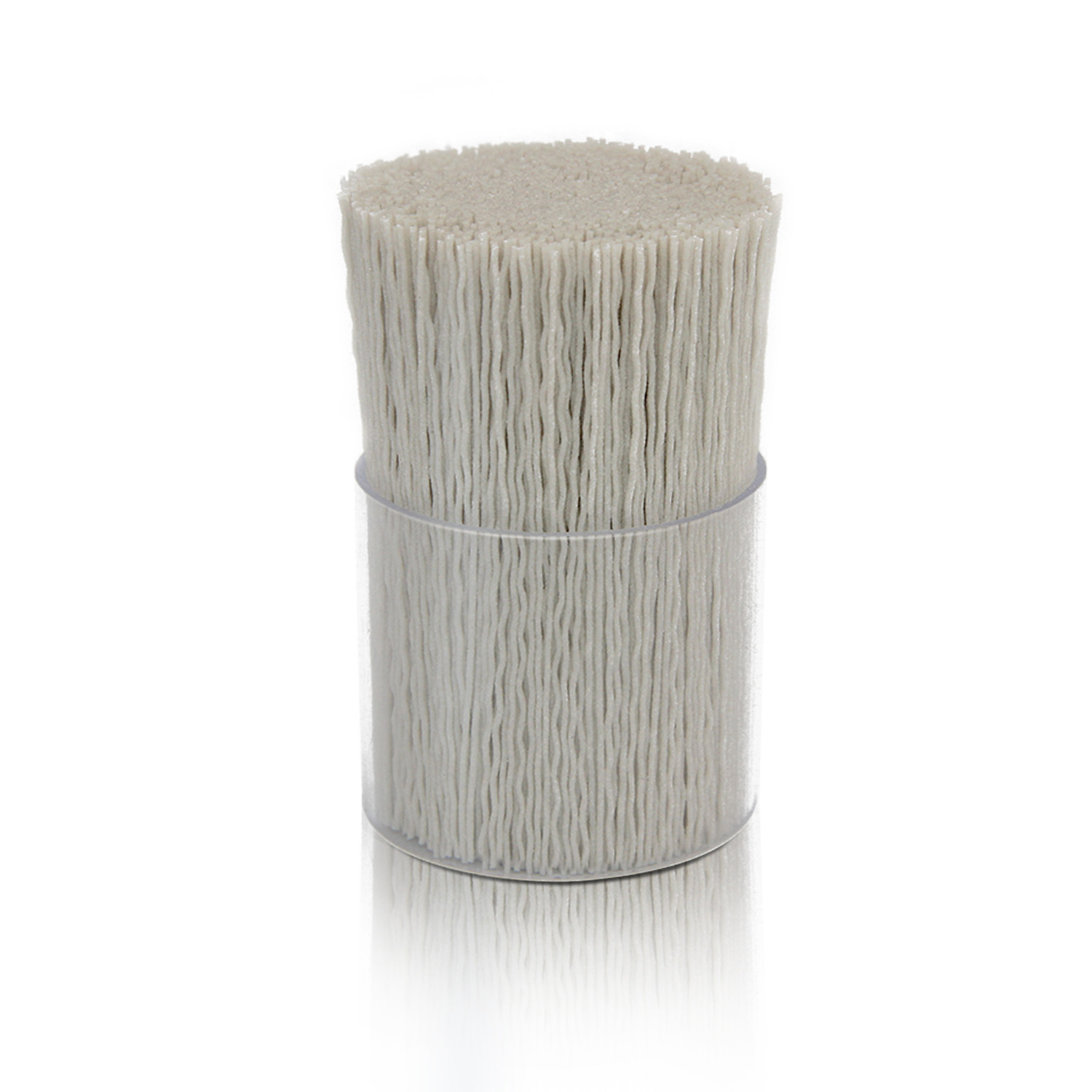

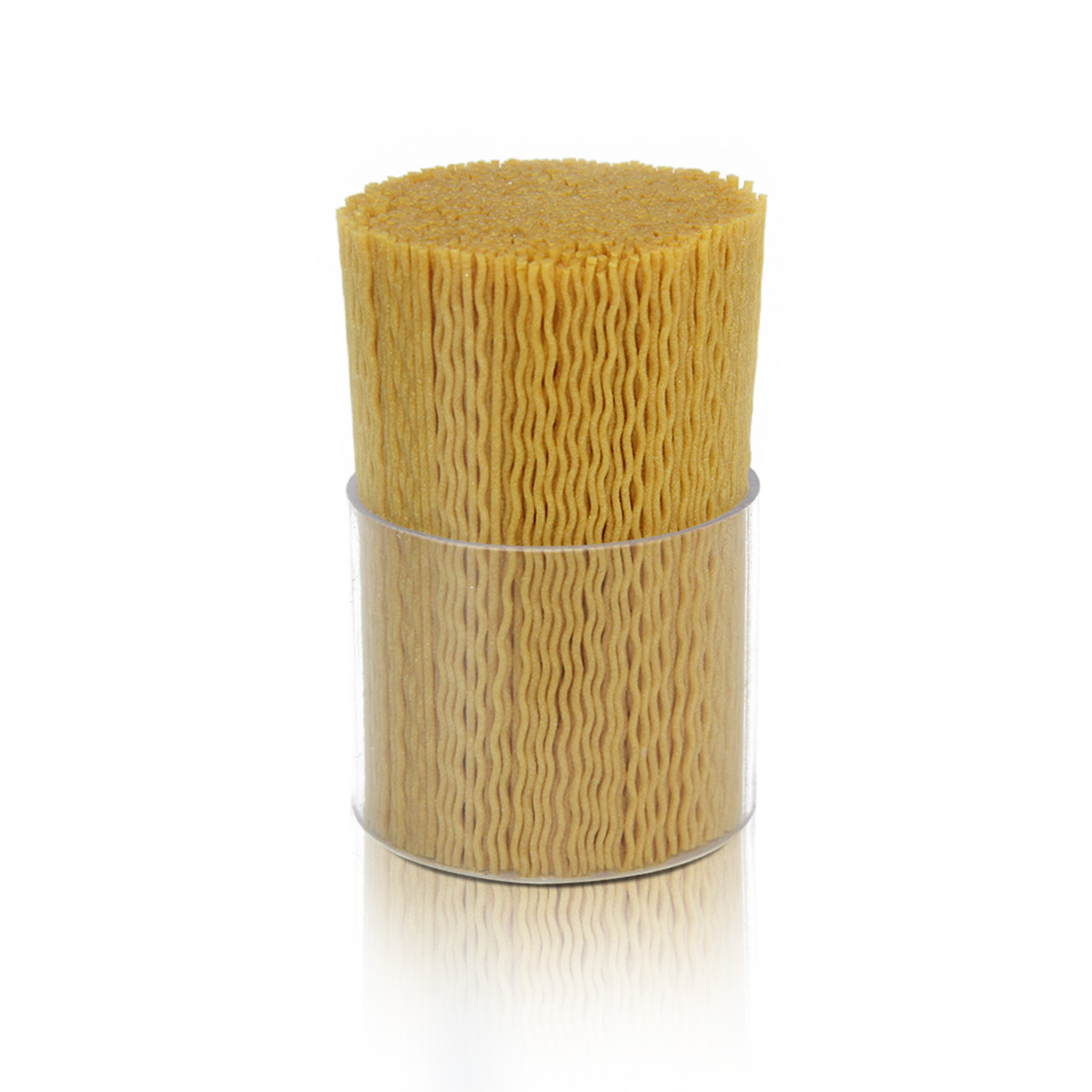
Cost-balanced option for stone lines: Hybrid Abrasive Filament FAQ.